Why We Love Timber Frame
Timber framing is a beautiful craft that gives buildings a sturdy skeleton of exposed timbers and naturally lends itself to biophilic design. Keeping the structural timbers within the conditioned warm and dry space creates durability and longevity that can be extended with deconstructability when traditional joinery practices are used. The best compliment to these natural aesthetic and structural elements is to have a robust, vapor-open, airtight, and bio-based envelope. Together, these strategies create buildings that are built to last, as many timber frames have for centuries around the world.

Protect From Water, Air, and Vapor - Then Insulate
Typical timber frame assemblies run the waterproofing, airtight, and thermal layers outboard of the frame to showcase the beauty of the timbers on the interior. In some cases, the timbers are partially embedded into the walls/roof, but the waterproofing and the majority of the thermal layer remain outboard of the timbers.
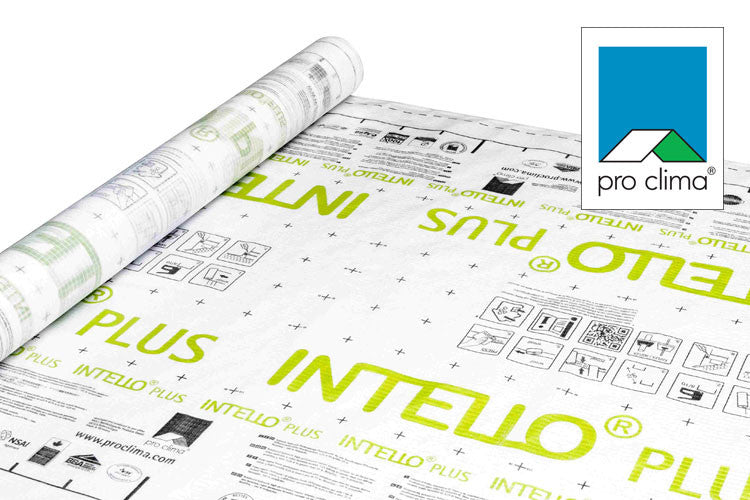
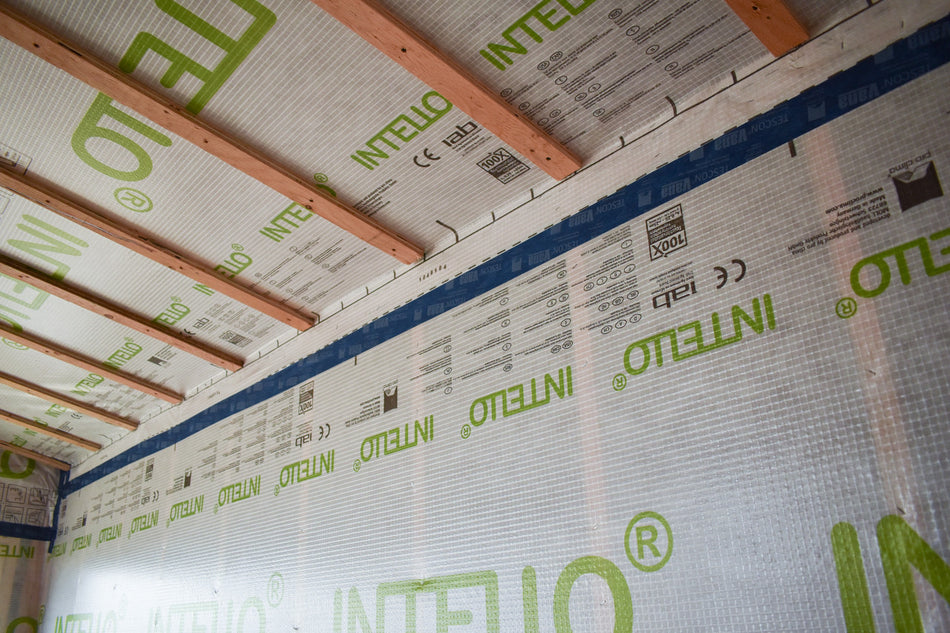
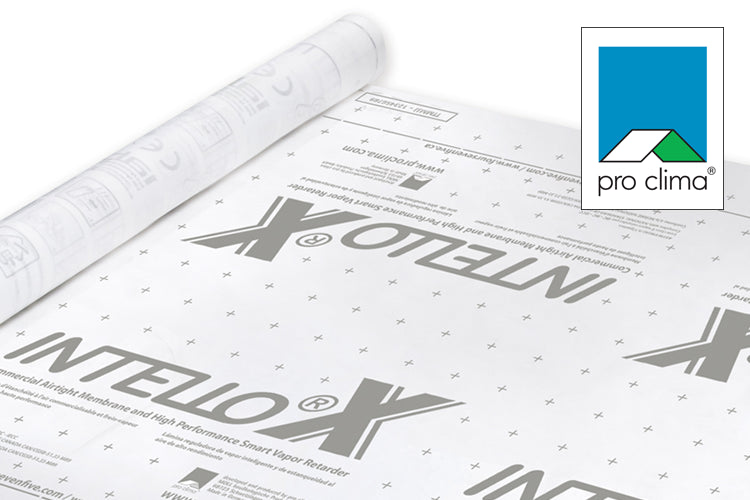
Because the wood is a primary aesthetic element, it is often important to cover them quickly to protect from weather exposure, water damage, and UV degradation. One effective solution is Pro Clima’s INTELLO X: a smart vapor control membrane that acts as a temporary weather barrier while the slower work of insulating the exterior is accomplished. When the envelope is complete, the INTELLO X functions as the interior air barrier protecting the insulation cavity.
| Product | Fastening | Permeability | UV exposure rating |
|---|---|---|---|
 INTELLO X INTELLO X
|
Stapled, taped with TESCON VANA | Variable: 0.13 to 13 perms | 2 months |
|
Application: Wall + Roof |
|||
To create an insulation layer outside of the frame, there is typically either a wood frame (TJI, Larsen Truss, 2x) or a continuous board insulation like wood fiber insulation. With the interior timber framing structure exposed, the walls typically attach to the exterior of the timber frames spanning between and running on the exterior side of the timbers. A wood frame can be built on site or prefabricated off-site, and can be filled with materials such as cellulose, wood fiber, hemp, or straw.
Wood Framed On Site
Site-built timber frames are commonly sheathed on their exteriors. This can be done with plywood, exterior grade gypsum boards or (T&G) boards, all of which span across the timbers on the exterior side, and are supported/nailed to horizontal strapping spanning across the timbers on the exterior side. On the interior, they can be finished with gypsum, plaster, or paint - or in case of T&G/finish boards, they can be left exposed. INTELLO X would be installed outside of the sheathing/finishes and will be covered with an exterior insulated jacket on its exterior (fibrous insulation boards or 2x wall).


Prefabricated Off Site
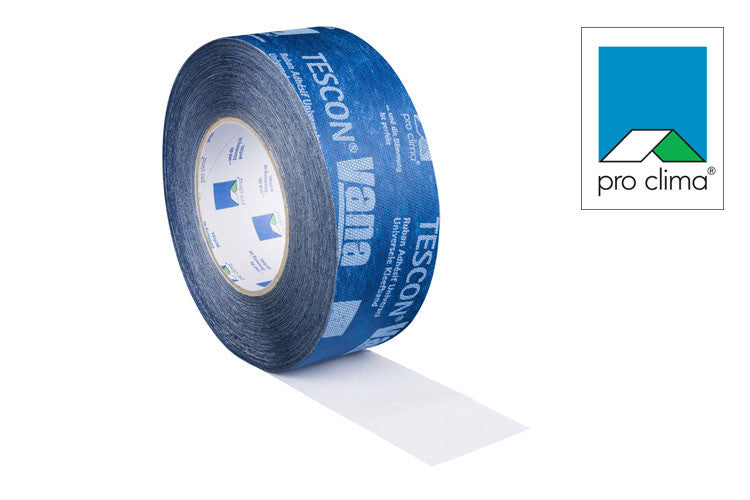
The timber framing can be enclosed with prefabricated wall panels. This requires both the timber frame and the panels to be accurately built so the prefab panels can be installed on site, allowing them to be quickly and durably sealed with TESCON VANA for long-term waterproofing and airsealing of these panels. New Energyworks is a great example of a timber framing company that also builds high-performance panels for their frames. See the “Prefab & Panelized On The Rise” blog post for examples of high-performance prefab options.


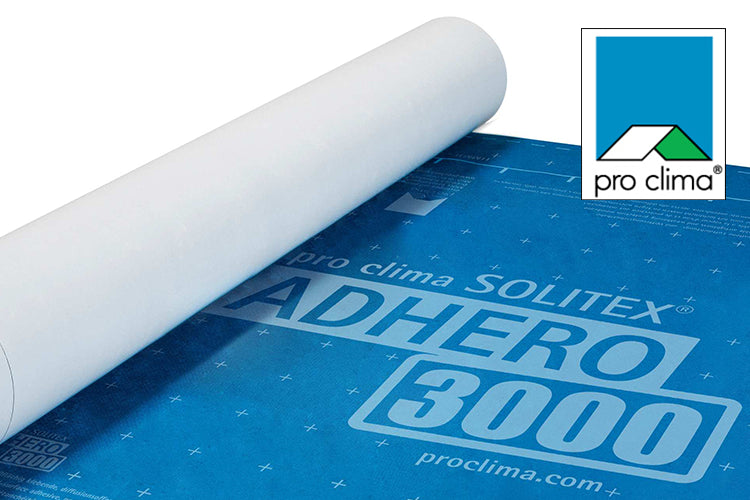
Projects can also use CLT walls and roofs. These walls are typically waterproofed on the exterior with the ADHERO 3000 membrane and then paired with exterior vapor-permeable wood fiber board insulation to provide continuous thermal control.

An Integrated Approach
High‑performance timber frame buildings succeed when structure and enclosure are designed as a single, integrated system. Prioritizing airtightness, high-quality WRBs and roof underlayments, vapor control, and continuous insulation will keep structural timbers warm and dry. This allows the pairing of timeless timber framing with modern expectations for durability, energy performance, and low‑carbon construction. Whether site‑built, prefabricated, or rooted in natural building traditions, thoughtful planning at the enclosure level allows timber frame projects to deliver resilient buildings designed to last for generations.